Dental Implants: A Long-Term Solution for Missing Teeth
What Is a Dental Implant?
A dental implant is a modern and long-lasting way to replace a missing tooth. Unlike removable dentures or traditional bridges, implants are designed to function like natural teeth. They help restore your smile, improve chewing ability, and preserve your jawbone.
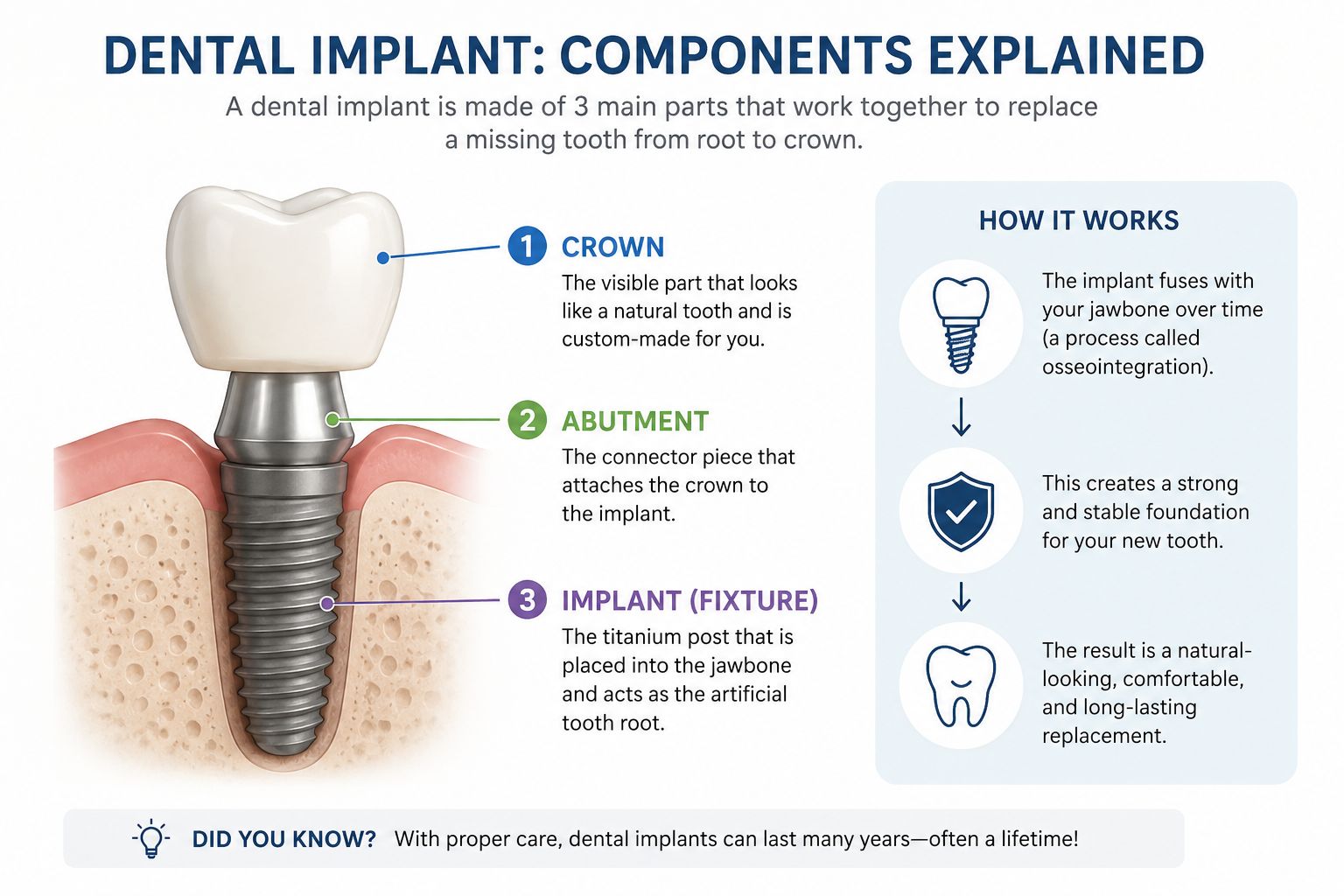
Dental implants are made up of several parts that work together to create a strong and natural-looking tooth replacement.
Easy Patient Illustration: Parts of a Dental Implant
Understanding Each Component
- Crown: The crown is the visible part of the implant that looks like a natural tooth. It is custom-made to match the shape and color of your surrounding teeth.
- Abutment: The abutment is a small connector piece that attaches the crown to the implant post.
- Implant Fixture: The implant fixture is a titanium screw that is surgically placed into the jawbone. It acts like the root of a natural tooth and provides stability.
Why Replacing a Missing Tooth Matters
Many patients believe that if a missing tooth is not visible, it does not need to be replaced. However, leaving a missing tooth untreated can lead to several long-term problems.
Consequences of Leaving a Missing Tooth
- Bone Loss: Your jawbone needs stimulation from chewing to stay healthy. When a tooth is missing, the jawbone in that area begins to shrink over time.
- Shifting Teeth: Neighboring teeth may begin to drift or tilt into the empty space, causing bite problems and crowding.
- Difficulty Chewing: Missing teeth can make it harder to chew properly, especially with harder foods.
- Increased Wear on Remaining Teeth: Other teeth may take on extra pressure while chewing, causing excessive wear or fractures.
- Changes in Facial Appearance: Severe bone loss from missing teeth can eventually affect facial support and contribute to an aged appearance.
- Higher Risk of Gum Problems: Food trapping and shifting teeth can increase the risk of gum disease and decay.
When Large Decay Requires Extraction
Sometimes a tooth becomes too damaged to save. Large cavities, deep fractures, or severe infections can compromise the structure of the tooth.
Common Reasons a Tooth May Need Extraction
- Extensive Decay: If decay has destroyed too much tooth structure, there may not be enough healthy tooth remaining to support a filling or crown.
- Infection Reaching the Nerve: Deep decay can spread into the nerve of the tooth, causing pain, swelling, and infection.
- Fractured Teeth: Cracks extending below the gumline may make the tooth non-restorable.
- Failed Previous Dental Work: Old fillings, crowns, or root canals may fail over time, leaving the tooth too weak to restore.
- Bone Loss or Severe Gum Disease: Advanced periodontal disease can loosen teeth and compromise support.
When a tooth cannot be predictably restored, extraction may be the safest option to prevent infection and further complications.
Pros of Dental Implants
- Natural Appearance: Implants are designed to look and feel like natural teeth.
- Strong and Stable: Because implants are anchored into the jawbone, they provide excellent stability while eating and speaking.
- Helps Preserve Bone: Implants stimulate the jawbone and help reduce bone loss.
- Protects Neighboring Teeth: Unlike traditional bridges, implants usually do not require shaving down adjacent teeth.
- Long-Term Solution: With proper care and maintenance, dental implants can last many years.
- Improved Comfort: Implants do not move around like removable dentures.
Cons of Dental Implants
- Surgical Procedure Required: Implants require minor oral surgery for placement.
- Healing Time: The implant may require several months to fully integrate with the bone before the final crown is placed.
- Cost: Implants are often a larger upfront investment compared to other tooth replacement options.
- Requires Good Oral Hygiene: Implants still require regular brushing, flossing, and professional cleanings.
- Not Every Patient Is an Immediate Candidate: Certain medical conditions, smoking habits, or severe bone loss may require additional treatment before implant placement.
Who Is a Good Candidate for Dental Implants?
Most healthy adults with missing teeth may qualify for dental implants. A consultation and imaging evaluation can help determine whether there is enough healthy bone for implant placement.
Even patients with bone loss may still qualify with procedures such as bone grafting.
Final Thoughts
Dental implants are one of the most predictable and functional options for replacing missing teeth. Replacing missing teeth early can help preserve your oral health, maintain proper chewing function, and protect the surrounding teeth and bone.
If you have a damaged or missing tooth, scheduling an evaluation early may help prevent more extensive treatment later.
Schedule a Consultation
If you are considering dental implants or have a tooth with large decay or damage, our team is here to help evaluate your options and create a personalized treatment plan.
Related Posts
Invisalign® is a popular orthodontic treatment that uses clear aligners to straighten teeth without the need for metal brackets or wires. While the aligners are designed for comfort, some patients may experience minor discomfort, typically when starting a new tray. Fortunately, with a few simple tips, patients can enhance their comfort throughout Invisalign treatment.Invisalign is…
Looking for information on periodontic care? Continue reading to learn about situations when a dentist might recommend periodontics. Periodontal disease, commonly known as gum disease, is a serious oral health issue that can result in severe oral infections and tooth loss. Periodontal disease may be contained and handled with the appropriate professional treatment.Gum disease can…
Invisalign treatment is one of the most popular teeth straightening options available. This orthodontic treatment offers a discreet and effective alternative to traditional metal braces. Understanding the essential aspects of Invisalign treatment can help you make informed decisions about your oral health.Invisalign treatment uses clear aligners made from medical-grade thermoplastic material. These aligners are custom-designed…
Invisalign is a popular orthodontic treatment for individuals seeking a discreet and effective way to straighten their teeth. Using clear, removable aligners, Invisalign offers a modern alternative to traditional braces. This treatment appeals to many patients due to its comfort and convenience, making it a preferred choice for addressing various orthodontic concerns. Understanding whether Invisalign…